PN Feedburner | PN iTunes | PN Twitter | PN Facebook | PN Video | PN Goodreads | PN Tumblr
4/10/11
Playlist - Jazz Cafe 4/10
Duende
Del Mate, Pedro Giraudo Jazz Orchestra, Cordoba
PN Feedburner | PN iTunes | PN Twitter | PN Facebook | PN Video | PN Goodreads | PN Tumblr
4/9/11
Guest Host - Jazz Cafe
Once again, I'll be guest hosting the Jazz Cafe this Sunday morning from 7-9 am on 88.9 FM WDNA in South Florida and online at wdna.org. Since the start of the new year, I've received some 30 new CDs of music, so I'll be sticking closer to my buddy Ed Blanco's usual format new music in the second hour. So, it'll be jazz, blues, and creative backbeats to start things off, and new music from Arturo O'Farrill and the Afro Latin Jazz Orchestra, Brian Lynch, The Rempis Percussion Quartet, Marc Copland, Pablo Held, and the Pedro Giraudo Orchestra, among others. If you haven't had a chance to tune in to listen to WDNA, bend an ear our way and see what's being threatened by Congressional budget-cutting. Peace!
PN Feedburner | PN iTunes | PN Twitter | PN Facebook | PN Video | PN Goodreads | PN Tumblr
Zappa: A Biography
The late Frank Zappa has
always been a frustrating figure in the history of 20th century music. Was he a failure as a rock musician because
he never had a truly widespread popularity?
Was he a genius who somehow couldn’t resist rubbing the nose of the
public in his own apparent obsessions with vulgar language and shocking sexual
behavior? Was he a pop traditionalist
with deep roots in doo-wop and rhythm and blues, or a compositional
revolutionary along the lines of Stravinsky and Schoenberg? In the end, Zappa was, it seems, all these
things, and more.
The prolific pop culture biographer Barry Miles – who’s
written also about the lives of Paul McCartney, Allan Ginsberg, and Jack
Kerouac – has now turned his attention and his research staff to Zappa. Miles’s new book about of Frank Zappa is more useful than
Zappa’s own 1988 autobiography in sorting out the facts of his life from the
myths, but it falls short in many ways when it attempts to analyze the
significance and meaning of Zappa’s creative work.
Zappa’s parents were from a fairly traditional
Italian-American background – which is to say, rather rigidly Roman Catholic –
and Zappa grew up in a family that was strict and conservative, even perhaps by
the standards of the 1950s. Add to this
the Zappa family’s tendency to relocate every two or three years – Frank’s
father worked for the defense industry – and young Zappa found himself
gravitating toward rock and R&B music as a means of escape and comfort from
his family as well as a way to fit in among his constantly changing peer
group. By the time Zappa was a teenager
and the family had settled (so to speak) in one of the desert suburbs of
Southern California, Zappa was playing guitar in various bands.
At the same time, Zappa began developing an interest in –
what can we call them – serious 20th century composers like Edgar Varese and,
in particular, Igor Stravinsky, and Zappa’s music teachers encouraged him to
learn to write musical scores. Zappa
admits scribbling out music on staff sheets just in the sheer curiosity to hear
what it all sounded like when a band or orchestra played it. Zappa finished high school, but didn’t get
much more than a few classes in music theory at community college before he
left to pursue his interests in music full time.
By time he began
his career as an independent musician, he had already established several
characteristics of his process of creation: first, Zappa always worked
extremely long and intense hours; second, he had a knack for exploiting (for
better and for worse) the talents and resources of those around him; third, he
demanded complete creative control of every aspect of his work; and lastly, he
rarely turned up an opportunity to shock or offend the establishment. Perhaps because of these traits, perhaps in
spite of them, Zappa managed to turn out a consistently bold and innovative
rock music, as well as, in the end, a considerable amount of fascinating
“serious” music written for the orchestra and the Synclavier.
Miles does an admirable job of chronicling the private and
public life of Zappa in his childhood, early years, and his peak creative
years, which are in this reviewer’s opinion, from 1968’s We’re Only In It For The Money to 1975’s One Size Fits All. People
from the earlier years are perhaps more willing to go on the record about
Zappa’s cold treatment of band mates or his often-denied marital infidelities
or his disposition to be a prima-donna or an egomaniac. In the later years of Zappa’s life, as he
withdrew from touring, focused on his studio work, and eventually succumbed to
cancer in 1993, he was surrounded by a close circle of family and friends who
remain loyal and tight-lipped. You can’t
fault Miles for that.
PN Feedburner | PN iTunes | PN Twitter | PN Facebook | PN Video | PN Goodreads | PN Tumblr
4/6/11
Northern Sun, Southern Moon: Europe's Reinvention of Jazz
Jazz performer, composer, and writer Mike Heffley is also a freshly-minted professor of Ethnomusicology, and his book, Northern Sun, Southern Moon: Europe’s Reinvention of Jazz, argues that some of the most interesting music being made under the heading of J-A-Z-Z hasn’t been in its birthplace in the United States.
Heffley’s argument runs something like this: With the arrival of free jazz, under the influence of innovative American players such as Ornette Coleman, John Coltrane, Sun Ra, and Cecil Taylor, and with the maturation of a second generation of European jazz players – those coming after Django Reinhart and Stephane Grappelli – European players seized upon free jazz and made it something their own. Back in the United States, the author writes, free jazz players like Coleman and Taylor, Archie Shepp, Anthony Braxton, Albert Ayler, Pharoh Sanders, and Lester Bowie were eclipsed by the more commercial fusion music of the 1970s, and then, in the 1980s, by the neo-conservative “classical” repertory jazz of the Young Lions, led, if you will, by Wynton Marsalis.
Both both fusion music and repertory jazz are less about art and more about making money, suggests the author, and free jazz, both in America and Europe, is where the music has continued to evolve. Filthy lucre is the problem, and, apparently, in Europe, says the author, where the arts receive more support, musicians can concern themselves less with what sells to in the market and more with what appears to their imaginations.
In addition to discussing the importance of American free jazz and avant-garde players, Mike Heffley presents those US musicians in their proper stature and influence in the various musical cultures of the nations of Europe. Nation by nation, the author traces the development of each country’s particular style of music, its prominent musicians, and its relation to the larger phenomenon of free jazz on the Continent. Often overlooked European players such as Albert Mangelsdorff, Evan Parker, Peter Brotzmann, Alexander von Schlippenbach, and Peter Kowald are all featured prominently as key figures in the distinctive development of Europe’s music.
Keep in mind that author Heffley is an ethnomusicologist, and that his book, I would guess, is probably some version of his doctoral dissertation. As much, it may be a little too technical or esoteric for some tastes. Frankly, I didn’t understand some of the theoretical passages. But Heffley does a very fine job in his narrative sections, and his research is impeccable. As a work that explores new territory and brings to light scores of musicians and the musical heritage of a dozen nations, this book is invaluable. Anyone interested in free jazz or the avant garde will want to take a look.
PN Feedburner | PN iTunes | PN Twitter | PN Facebook | PN Video | PN Goodreads | PN Tumblr
Heffley’s argument runs something like this: With the arrival of free jazz, under the influence of innovative American players such as Ornette Coleman, John Coltrane, Sun Ra, and Cecil Taylor, and with the maturation of a second generation of European jazz players – those coming after Django Reinhart and Stephane Grappelli – European players seized upon free jazz and made it something their own. Back in the United States, the author writes, free jazz players like Coleman and Taylor, Archie Shepp, Anthony Braxton, Albert Ayler, Pharoh Sanders, and Lester Bowie were eclipsed by the more commercial fusion music of the 1970s, and then, in the 1980s, by the neo-conservative “classical” repertory jazz of the Young Lions, led, if you will, by Wynton Marsalis.
Both both fusion music and repertory jazz are less about art and more about making money, suggests the author, and free jazz, both in America and Europe, is where the music has continued to evolve. Filthy lucre is the problem, and, apparently, in Europe, says the author, where the arts receive more support, musicians can concern themselves less with what sells to in the market and more with what appears to their imaginations.
In addition to discussing the importance of American free jazz and avant-garde players, Mike Heffley presents those US musicians in their proper stature and influence in the various musical cultures of the nations of Europe. Nation by nation, the author traces the development of each country’s particular style of music, its prominent musicians, and its relation to the larger phenomenon of free jazz on the Continent. Often overlooked European players such as Albert Mangelsdorff, Evan Parker, Peter Brotzmann, Alexander von Schlippenbach, and Peter Kowald are all featured prominently as key figures in the distinctive development of Europe’s music.
Keep in mind that author Heffley is an ethnomusicologist, and that his book, I would guess, is probably some version of his doctoral dissertation. As much, it may be a little too technical or esoteric for some tastes. Frankly, I didn’t understand some of the theoretical passages. But Heffley does a very fine job in his narrative sections, and his research is impeccable. As a work that explores new territory and brings to light scores of musicians and the musical heritage of a dozen nations, this book is invaluable. Anyone interested in free jazz or the avant garde will want to take a look.
PN Feedburner | PN iTunes | PN Twitter | PN Facebook | PN Video | PN Goodreads | PN Tumblr
4/5/11
Understanding Jazz: Ways to Listen
Although relatively young as national cultural institutions are concerned, Jazz at Lincoln Center in New York, under the direction of Wynton Marsalis, has become the major force in the promotion and education of the art of jazz. Whether it’s the Center’s the weekly radio program hosted by Ed Bradley, or its PBS specials, or the regular recordings by its groups, or the innovative compositions it underwrites, or the many concerts and events it hosts up there in its home at Columbus Circle in Manhattan, JALC commands a vast array of cultural and financial resources for a non-profit arts organization.
It is not surprising, then, that the Center has produced a new book about the music, entitled Understanding Jazz: Ways to Listen. Written by the acclaimed music critic Tom Piazza, Understanding Jazz is a fine introduction for non-musicians as to how to understand some of what jazz musicians are doing in the midst of a live performance. Beginning with the sometimes paradoxical relationship of the individual soloist to the group – which Piazza explains as the relationship between foreground and background – the reader is taken through the basics, so to speak, of how to listen. Piazza clearly explains, for the lay listener, how the blues and other song forms are structured, as well as how musicians improvise in relationship to those forms and tell a story. Piazza is most effective in his discussion of rhythm, of time, and of that elusive element known as swing:
“Picture the arc of a common playground swing,” he writes. “Once you get into a regular rhythm on the swing, the amount of time it takes to get from one end of the arc and then back will be the same each time. But your actual speed as you traverse the arc is not constant; in fact, there is a curve of acceleration and deceleration – a speeding-up on the downward motion and a slowing on the upward part.... In a jazz performance,” Piazza continues, while every bar of music should take the same amount of ‘clock time’ – fill the same period – within those bars and groups of bars there is a constant sense of respiration, of infinitesimal accelerations and decelerations in the actual playing, even though the background pulse, the tempo, remains constant. A large part of the music’s meaning comes from playing with time, this sense of being able to operate flexibly, accurately, and freely within the implied lockstep of chronology—an affirmation, in fact, of the living body against the dead abstraction of time.”
This is all interesting and useful explanation, made all the more interesting and useful because the musical explanations in the book refer often to a companion CD that features seven distinctive jazz tracks. Artists on the CD include King Oliver, Count Basie, Duke Ellington, Dizzy Gillespie, Miles Davis, Lester Young, Sonny Rollins, Sonny Stitt, and Stan Getz – among others. Pizza very easily slips into specific musical references to Rollins’s “Mack the Knife” or Davis’s“Footprints” to help you hear what he’s writing about. Understanding Jazz is a book you read with the CD player remote never far from your hand.
At the end of each chapter on each particular music topic, Piazza also includes a rather haphazard discography, a feature which novices might find useful but will likely distract and annoy more expert listeners. Still, all in all, Understanding Jazz is an excellent way for the beginning fan of jazz to make significant steps forward in learning how to listen more carefully to this often complex music and with a more intelligent ear.
PN Feedburner | PN iTunes | PN Twitter | PN Facebook | PN Video | PN Goodreads | PN Tumblr
It is not surprising, then, that the Center has produced a new book about the music, entitled Understanding Jazz: Ways to Listen. Written by the acclaimed music critic Tom Piazza, Understanding Jazz is a fine introduction for non-musicians as to how to understand some of what jazz musicians are doing in the midst of a live performance. Beginning with the sometimes paradoxical relationship of the individual soloist to the group – which Piazza explains as the relationship between foreground and background – the reader is taken through the basics, so to speak, of how to listen. Piazza clearly explains, for the lay listener, how the blues and other song forms are structured, as well as how musicians improvise in relationship to those forms and tell a story. Piazza is most effective in his discussion of rhythm, of time, and of that elusive element known as swing:
“Picture the arc of a common playground swing,” he writes. “Once you get into a regular rhythm on the swing, the amount of time it takes to get from one end of the arc and then back will be the same each time. But your actual speed as you traverse the arc is not constant; in fact, there is a curve of acceleration and deceleration – a speeding-up on the downward motion and a slowing on the upward part.... In a jazz performance,” Piazza continues, while every bar of music should take the same amount of ‘clock time’ – fill the same period – within those bars and groups of bars there is a constant sense of respiration, of infinitesimal accelerations and decelerations in the actual playing, even though the background pulse, the tempo, remains constant. A large part of the music’s meaning comes from playing with time, this sense of being able to operate flexibly, accurately, and freely within the implied lockstep of chronology—an affirmation, in fact, of the living body against the dead abstraction of time.”
This is all interesting and useful explanation, made all the more interesting and useful because the musical explanations in the book refer often to a companion CD that features seven distinctive jazz tracks. Artists on the CD include King Oliver, Count Basie, Duke Ellington, Dizzy Gillespie, Miles Davis, Lester Young, Sonny Rollins, Sonny Stitt, and Stan Getz – among others. Pizza very easily slips into specific musical references to Rollins’s “Mack the Knife” or Davis’s“Footprints” to help you hear what he’s writing about. Understanding Jazz is a book you read with the CD player remote never far from your hand.
At the end of each chapter on each particular music topic, Piazza also includes a rather haphazard discography, a feature which novices might find useful but will likely distract and annoy more expert listeners. Still, all in all, Understanding Jazz is an excellent way for the beginning fan of jazz to make significant steps forward in learning how to listen more carefully to this often complex music and with a more intelligent ear.
PN Feedburner | PN iTunes | PN Twitter | PN Facebook | PN Video | PN Goodreads | PN Tumblr
4/4/11
The Last Miles: The Music of Miles Davis 1980-1991
British journalist George Cole, a regular contributor to Jazzwize, has undertaken the project of assessing the often overlooked period from Miles Davis’s comeback in 1980 to his death in 1991, a stage in the jazz legend’s life which has puzzled so many of his biographers. What are we to make of the music of Miles Davis’s final decade, full guitar pyrotechnics and synthesizers, with drum machines and overly slick production tricks? What in the world was Miles Davis thinking?
Many critics are dismissive of this last span of music-making, saying that Miles couldn’t go back to what he had done, but that he also didn’t know how to go forward, and so he went sideways. Others have argued that, a lifetime of creativity already accomplished, Miles chose to “bask in the sun and be the personality that he had become,” and that he simply wanted to be popular, summing up the music of his later years as nothing more than “an advanced form of instrumental pop.” All in all, the verdict on this music was quick and severe.
In his book, The Last Miles, writer Cole approaches the music and the man with vigor, directness, respect, and, most of all, an open mind. Cole gives Miles the benefit of the doubt, and his book is all the better for it.
After almost three decades of making jazz – as well as changing the direction of the music several times – by the middle of the 1970s trumpeter and bandleader Miles Davis retreated from public life and retired to his New York brownstone on West 77th Street. Distracted by drinking, drugs, and women, suffering from health problems and, no doubt, mentally burned out after so many years of being at his peak creatively, Miles Davis lived like a self-described “hermit” from the years 1976 to 1980. After several years of this, a few of his friends – most notably Cicely Tyson, who later became Davis’s third wife – managed to help Miles clean up his act, stabilize his health, and, by the spring of 1980, get him in the spirit of making music again.
Having left off his musical development with the street sounds of 1972’s On the Corner and the fusion that can be heard on the 1975 live albums Agharta and Pangaea, Miles needs an album under his belt before he can get his chops back, but by the time he releases Star People and Decoy, he has returned to some semblance of his former self with musicians like bassists Marcus Miller and Daryl Jones, guitarist John Scofield, and briefly, saxophonist Branford Marsalis. A second set of albums, largely written and produced by Marcus Miller, feature Miles in a mostly digital domain of computer-created sounds – the groundbreaking Tutu, along with Siesta and Amandla. The album Miles was working on when he died, a fusion of hip-hop and jazz, called Doo-Bop, also receives serious attention from writer Cole, who, again and again, balances praise and criticism fairly within the context of taking all this music seriously.
All in all, Cole is meticulous in his research and interviews, and readers will have more than enough information about the writing, production, and performance of all this music – often from the people who worked with Miles first hand. Cole is at his best in telling the story of how each album came together and in explaining the new directions Miles felt he was taking. Cole also provides a particularly fine chapter on the evolution of Miles Davis’s live performances over the last decade of his life.
Summing up matters, Cole suggests that it is still too early to pronounce the verdict on the music Miles final years. Whatever he was doing – either resting on his laurels, seeking a broader audience, or continuing to explore new directions – any dismissal of Miles’s work seems premature. I know, for one, that the first Miles Davis album I ever listened to was 1983’s Star People – and I have become nothing less than a fan of all his music since then.
PN Feedburner | PN iTunes | PN Twitter | PN Facebook | PN Video | PN Goodreads | PN Tumblr
Many critics are dismissive of this last span of music-making, saying that Miles couldn’t go back to what he had done, but that he also didn’t know how to go forward, and so he went sideways. Others have argued that, a lifetime of creativity already accomplished, Miles chose to “bask in the sun and be the personality that he had become,” and that he simply wanted to be popular, summing up the music of his later years as nothing more than “an advanced form of instrumental pop.” All in all, the verdict on this music was quick and severe.
In his book, The Last Miles, writer Cole approaches the music and the man with vigor, directness, respect, and, most of all, an open mind. Cole gives Miles the benefit of the doubt, and his book is all the better for it.
After almost three decades of making jazz – as well as changing the direction of the music several times – by the middle of the 1970s trumpeter and bandleader Miles Davis retreated from public life and retired to his New York brownstone on West 77th Street. Distracted by drinking, drugs, and women, suffering from health problems and, no doubt, mentally burned out after so many years of being at his peak creatively, Miles Davis lived like a self-described “hermit” from the years 1976 to 1980. After several years of this, a few of his friends – most notably Cicely Tyson, who later became Davis’s third wife – managed to help Miles clean up his act, stabilize his health, and, by the spring of 1980, get him in the spirit of making music again.
Having left off his musical development with the street sounds of 1972’s On the Corner and the fusion that can be heard on the 1975 live albums Agharta and Pangaea, Miles needs an album under his belt before he can get his chops back, but by the time he releases Star People and Decoy, he has returned to some semblance of his former self with musicians like bassists Marcus Miller and Daryl Jones, guitarist John Scofield, and briefly, saxophonist Branford Marsalis. A second set of albums, largely written and produced by Marcus Miller, feature Miles in a mostly digital domain of computer-created sounds – the groundbreaking Tutu, along with Siesta and Amandla. The album Miles was working on when he died, a fusion of hip-hop and jazz, called Doo-Bop, also receives serious attention from writer Cole, who, again and again, balances praise and criticism fairly within the context of taking all this music seriously.
All in all, Cole is meticulous in his research and interviews, and readers will have more than enough information about the writing, production, and performance of all this music – often from the people who worked with Miles first hand. Cole is at his best in telling the story of how each album came together and in explaining the new directions Miles felt he was taking. Cole also provides a particularly fine chapter on the evolution of Miles Davis’s live performances over the last decade of his life.
Summing up matters, Cole suggests that it is still too early to pronounce the verdict on the music Miles final years. Whatever he was doing – either resting on his laurels, seeking a broader audience, or continuing to explore new directions – any dismissal of Miles’s work seems premature. I know, for one, that the first Miles Davis album I ever listened to was 1983’s Star People – and I have become nothing less than a fan of all his music since then.
PN Feedburner | PN iTunes | PN Twitter | PN Facebook | PN Video | PN Goodreads | PN Tumblr

4/3/11
Reader's Notes - How Radio Rocks the New Music Ecosystem
From the Future of Music Coalition, we have an article that establishes the value of public community stations in bringing new music to listeners. While it might seem that, in the age of digital downloading, people find their own out-of-the-way music by browsing through billions of songs by millions of artists, but that's not necessarily so. A look at any iTunes top ten list pretty much tells you what you need to know: "Meet the new boss/Same as the old boss." As the article observes, it's really independent forces that drive discovery of fresh new acts and music: "In addition to music blogs and social networks, non-commercial radio are tastemakers that help get the word out early about great music." Full text of the FoM piece is here.
PN Feedburner | PN iTunes | PN Twitter | PN Facebook | PN Video | PN Goodreads | PN Tumblr
4/2/11
PN Video Jukebox - Dave Brubeck
A grand total of 15 clips from the career of pianist and composer Dave Brubeck.
PN Feedburner | PN iTunes | PN Twitter | PN Facebook | PN Video | PN Goodreads | PN Tumblr
Blackout - The Untold Story of Jackie Robinson's First Spring Training
Jackie Robinson, the African-American baseball player who, in 1947, was the first person of color to play in the modern major leagues, was on the vanguard of desegregation before most people in the country ever heard of him. During Robinson’s time as an Army officer during World War II, he was court-marshaled for refusing to move to the back of a bus, although he was later acquitted of the charges. In 1945, having signed a contract with the Brooklyn Dodgers, Robinson would still have to face, in 1946, a spring training in Florida with his assigned team for that season, the minor league Montreal Royals. During six weeks 1946, Robinson faced the first wave of racist resistance to his taking the field with white players in Florida communities such as Sanford, Deland, Jacksonville, Miami, and – to a lesser extent – Daytona Beach.
The book Blackout, by College of Charleston professor Chris Lamb, finally tells the often overlooked story of Jackie Robinson’s first spring training.
The color line is baseball was bound to have been broken sooner or later. The conservative, dictatorial first commissioner of baseball – Kenesaw Mountain Landis – had died, a vocal African-American and socialist press corps was demanding desegregation of the national pasttime, and black veterans who had fought racism and political oppression overseas were not going to tolerate it on American soil any longer. Add to these factors the tremendous amounts of money to be made by winning teams in the postwar major leagues – well, the talent of black ballplayers could no longer be ignored by the white baseball establishment. The Dodgers’ general manager Branch Rickey supported segregation in large part because he wanted to win: Jackie Robinson would be but one of the black players that would help the Dodgers to a championship in the 1950s.
Chris Lamb, the author of Blackout, does an tremendous job of depicting the outright suffering Jackie Robinson and his wife Rachel endured in that spring of 1946. Transportation and accommodations were so bad that the young Robinsons were unable to make the full trip by train from Los Angeles to Florida. In the Florida panhandle, they were simply kicked off the train. And, when they finally arrived in Daytona Beach, by bus, several days late, frustrated and humiliated, there was no place for them to stay and few places to eat. The Robinsons could rely only upon the generosity of an informal and inconsistent network of black citizens for their daily needs. Daytona Beach, proud home to the activist Mary McLeod Bethune and to Bethune-Cookman College, was in fact the most hospitable place they could find.
Daytona was marginally tolerant of people of color, but most other communities were not. Across the state, not only were the health care, transportation, and school systems segregated, but so too were restaurants and hotels, the bathrooms and drinking fountains, the beaches and swimming pools, as well as actual baseball fields. In many places, Robinson would suit up and take his position, only to have police officers order him off the field. Some grass and dirt, by law, was for whites only. Often, Robinson wasn’t even allowed to sit next to his white teammates on the bench.
Again and again, author Lamb has unearthed horrifying examples of just how commonplace and brutal jim crow was during the 1930s and 40s, and, balancing that, he finds as well many heartening stories of those now-forgotten heroes who helped Jackie Robinson along the way.
Somehow, although he came as close to quitting that spring as perhaps during any time in his baseball career, Robinson made it through. He played when he could, and when the season started, he was the Montreal Royals starting second baseman, leading them to 100 win and the league championship, leading the league it hitting, baserunning, and fielding. The following year, as many of you may know, he started the season with the major league Brooklyn Dodgers, putting a far more public face on the cause of desegregation.
Listen to Blackout review on iTunes - Leave a review!
Listen to Blackout review on Feedburner
PN Feedburner | PN iTunes | PN Twitter | PN Facebook | PN Video | PN Goodreads | PN Tumblr
The book Blackout, by College of Charleston professor Chris Lamb, finally tells the often overlooked story of Jackie Robinson’s first spring training.
The color line is baseball was bound to have been broken sooner or later. The conservative, dictatorial first commissioner of baseball – Kenesaw Mountain Landis – had died, a vocal African-American and socialist press corps was demanding desegregation of the national pasttime, and black veterans who had fought racism and political oppression overseas were not going to tolerate it on American soil any longer. Add to these factors the tremendous amounts of money to be made by winning teams in the postwar major leagues – well, the talent of black ballplayers could no longer be ignored by the white baseball establishment. The Dodgers’ general manager Branch Rickey supported segregation in large part because he wanted to win: Jackie Robinson would be but one of the black players that would help the Dodgers to a championship in the 1950s.
Chris Lamb, the author of Blackout, does an tremendous job of depicting the outright suffering Jackie Robinson and his wife Rachel endured in that spring of 1946. Transportation and accommodations were so bad that the young Robinsons were unable to make the full trip by train from Los Angeles to Florida. In the Florida panhandle, they were simply kicked off the train. And, when they finally arrived in Daytona Beach, by bus, several days late, frustrated and humiliated, there was no place for them to stay and few places to eat. The Robinsons could rely only upon the generosity of an informal and inconsistent network of black citizens for their daily needs. Daytona Beach, proud home to the activist Mary McLeod Bethune and to Bethune-Cookman College, was in fact the most hospitable place they could find.
Daytona was marginally tolerant of people of color, but most other communities were not. Across the state, not only were the health care, transportation, and school systems segregated, but so too were restaurants and hotels, the bathrooms and drinking fountains, the beaches and swimming pools, as well as actual baseball fields. In many places, Robinson would suit up and take his position, only to have police officers order him off the field. Some grass and dirt, by law, was for whites only. Often, Robinson wasn’t even allowed to sit next to his white teammates on the bench.
Again and again, author Lamb has unearthed horrifying examples of just how commonplace and brutal jim crow was during the 1930s and 40s, and, balancing that, he finds as well many heartening stories of those now-forgotten heroes who helped Jackie Robinson along the way.
Somehow, although he came as close to quitting that spring as perhaps during any time in his baseball career, Robinson made it through. He played when he could, and when the season started, he was the Montreal Royals starting second baseman, leading them to 100 win and the league championship, leading the league it hitting, baserunning, and fielding. The following year, as many of you may know, he started the season with the major league Brooklyn Dodgers, putting a far more public face on the cause of desegregation.
Listen to Blackout review on iTunes - Leave a review!
Listen to Blackout review on Feedburner
PN Feedburner | PN iTunes | PN Twitter | PN Facebook | PN Video | PN Goodreads | PN Tumblr
PN Archives - Idiots and Fools
From the archives, a proposal to bring back the village idiot.
Listen to Idiots and Fools on iTunes - Leave a comment!
Listen to Idiots and Fools on Feedburner
PN Feedburner | PN iTunes | PN Twitter | PN Facebook | PN Video | PN Goodreads | PN Tumblr
Listen to Idiots and Fools on iTunes - Leave a comment!
Listen to Idiots and Fools on Feedburner
PN Feedburner | PN iTunes | PN Twitter | PN Facebook | PN Video | PN Goodreads | PN Tumblr
3/20/11
PN Archives - 'Django' by Michael Dregni
From the vault, a review of Michael Dregni's biography of innovative French jazz guitarist Django Reinhart.
Listen to Django Biography Review on iTunes - Leave a comment!
Listen to Django Biography Review on Feedburner
PN Feedburner | PN iTunes | PN Twitter | PN Facebook | PN Video | PN Goodreads | PN Tumblr
Listen to Django Biography Review on iTunes - Leave a comment!
Listen to Django Biography Review on Feedburner
PN Feedburner | PN iTunes | PN Twitter | PN Facebook | PN Video | PN Goodreads | PN Tumblr
Barcalounge Skipper - A Fan of MLB.TV
As much as I try to be in favor of the little guy (the smaller guy?) I have to admit that when it comes to sports, I'm a bit of a corporate shill. Because I hate paying any more money than I must to the wretched cable television providers, on and off for years I've subscribed to Major League Baseball's audio package and made do with the basic cable slate of baseball games available on basic cable -- the national telecasts and regional coverage of both the Marlins and the Rays. That's actually a pretty good range of baseball to watch, and I was able to listen to my team (the Red Sox) with the live audio feed of Boston's radio coverage for all 162 games. It worked for me for several years.
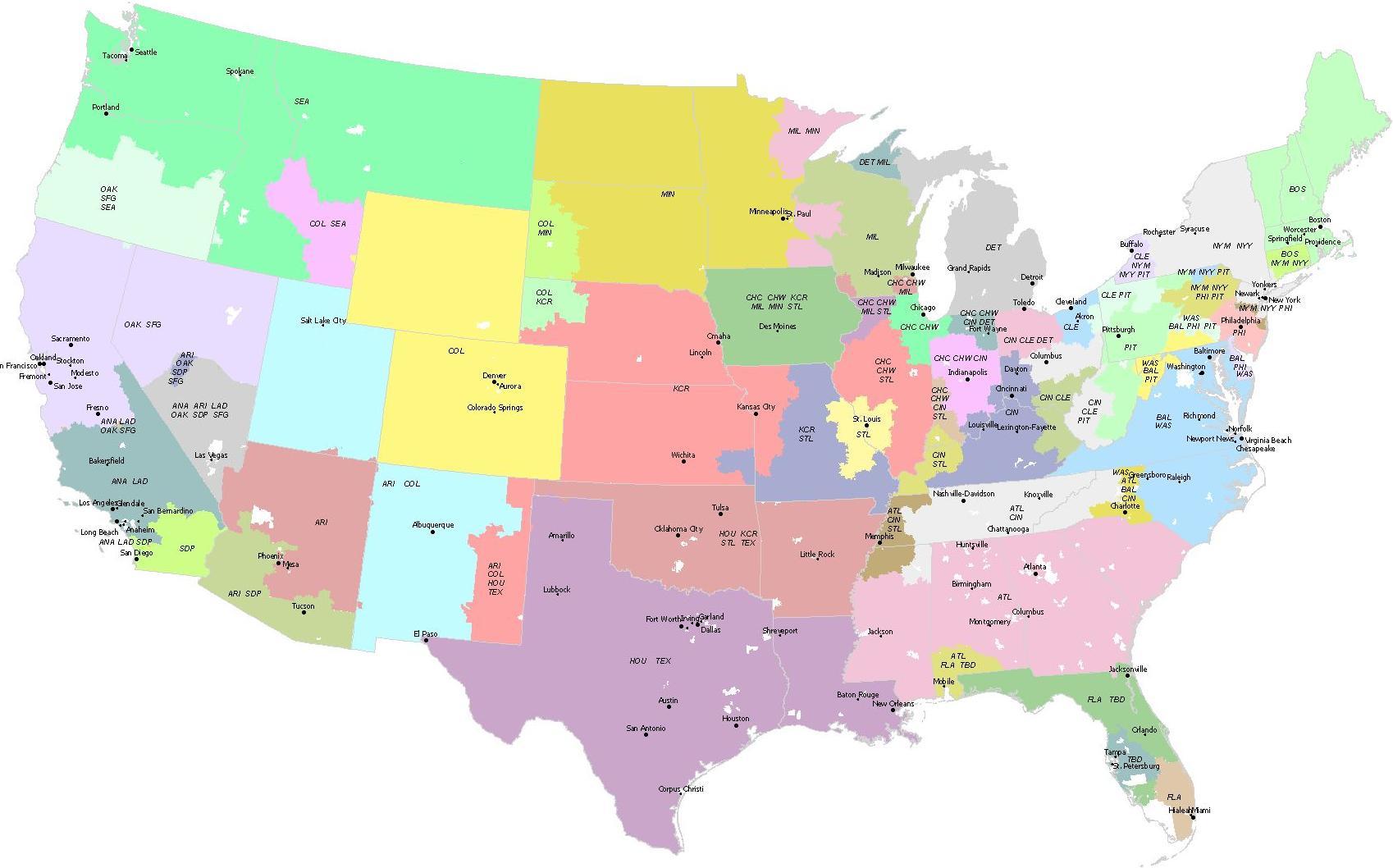
One issue related to baseball and television has always been the sport's arcane blackout rules -- I have attached the blackout map to the left here, but to see a full version of the map, click here. The current blackout map is a leftover from the 1970s, when teams had regional broadcast networks and geographical access to both the signal and the team meant something. The result of this completely silly system is that, if you live in the state of Iowa, you could have games of the Royals, Cubs, White Sox, Cardinals, Twins, and Brewers blacked out through any media. If you're overseas -- as I was for much of the summer of 2004, when the Red Sox made their championship run -- you can't access the games online, either. The obvious solution, of course, is that everyone, everywhere, should have access to all the games. Period. More viewers and listeners means more revenue; people who want to ballpark experience will still go to the park, even if parking is $20 and a beer is $10.
This year, I signed myself up for the big leagues' online video service, MLB.TV, and three weeks into spring training, I am thrilled. Even with the basic package, I've been able to choose from about a half dozen spring training games all month, and, during the regular season, over 2000 more games. Not only that, all of those games are archived, so if I miss a good matchup from a few days before, I can always watch a replay on my own time. And, if my eyes need to be busy, I can listen to the radio broadcast as well. The connection is great, the picture is clear, and the controls are very easy to use. The package costs me about $20 a month.
Even better, for a few more dollars, I can download to my iPhone an app called At Bat 11, which gives me the same package of video and audio on a fully portable device. Although the video on a 3G connection can be a little laggy, WiFi works just fine, and audio is no problem no matter what the connection.
I hate to rave about MLB.TV and At Bat 11, but I am raving. For the serious baseball fan who might watch a fair amount of out-of-market games, it's worth the money. Now, if you'll excuse me, I'm going to go listen to a few innings of the Cardinals-Red Sox in the back yard while the kids play in the pool.
PN Feedburner | PN iTunes | PN Twitter | PN Facebook | PN Video | PN Goodreads | PN Tumblr
One issue related to baseball and television has always been the sport's arcane blackout rules -- I have attached the blackout map to the left here, but to see a full version of the map, click here. The current blackout map is a leftover from the 1970s, when teams had regional broadcast networks and geographical access to both the signal and the team meant something. The result of this completely silly system is that, if you live in the state of Iowa, you could have games of the Royals, Cubs, White Sox, Cardinals, Twins, and Brewers blacked out through any media. If you're overseas -- as I was for much of the summer of 2004, when the Red Sox made their championship run -- you can't access the games online, either. The obvious solution, of course, is that everyone, everywhere, should have access to all the games. Period. More viewers and listeners means more revenue; people who want to ballpark experience will still go to the park, even if parking is $20 and a beer is $10.
This year, I signed myself up for the big leagues' online video service, MLB.TV, and three weeks into spring training, I am thrilled. Even with the basic package, I've been able to choose from about a half dozen spring training games all month, and, during the regular season, over 2000 more games. Not only that, all of those games are archived, so if I miss a good matchup from a few days before, I can always watch a replay on my own time. And, if my eyes need to be busy, I can listen to the radio broadcast as well. The connection is great, the picture is clear, and the controls are very easy to use. The package costs me about $20 a month.
Even better, for a few more dollars, I can download to my iPhone an app called At Bat 11, which gives me the same package of video and audio on a fully portable device. Although the video on a 3G connection can be a little laggy, WiFi works just fine, and audio is no problem no matter what the connection.
I hate to rave about MLB.TV and At Bat 11, but I am raving. For the serious baseball fan who might watch a fair amount of out-of-market games, it's worth the money. Now, if you'll excuse me, I'm going to go listen to a few innings of the Cardinals-Red Sox in the back yard while the kids play in the pool.
PN Feedburner | PN iTunes | PN Twitter | PN Facebook | PN Video | PN Goodreads | PN Tumblr
3/19/11
PN Archives - Other Saints
In the wake of St. Patrick's Day, we consider some of the other saints.
Listen to Other Saints on iTunes - leave a review!
Listen to Other Saints on Feedburner
PN Feedburner | PN iTunes | PN Twitter | PN Facebook | PN Video | PN Goodreads | PN Tumblr
Listen to Other Saints on iTunes - leave a review!
Listen to Other Saints on Feedburner
PN Feedburner | PN iTunes | PN Twitter | PN Facebook | PN Video | PN Goodreads | PN Tumblr
Reader's Notes - Dwayne McDuffie on Race in Comics
Here's a video of writer Dwayne McDuffie talking about the place of race in comics, and how readers' awareness of his own race made them -- there's no other word for it -- paranoid about their own perceptions of how McDuffie might change some of their favorite titles, among them Justice League and Teen Titans.
PN Feedburner | PN iTunes | PN Twitter | PN Facebook | PN Video | PN Goodreads | PN Tumblr
3/17/11
Hardball, Zombies, and Mysteries of Suburbia
![]() |
| Slices of the PN pie for all. . . |
In order to better serve the different groups of people that have responded to Passing Notes, I'm spinning off a few areas of content, with more mainstream books, film, food, comics, and a variety of musical interests being pursed as usual here at the Notes. Up until August of 2011, however, most content will be cross-posted to both Passing Notes and three new spots.
- Barcalounge Skipper will be a new home (but an old name) for writing about baseball and other sports. During the baseball season, the plan is to write about at least one game a week -- eschewing Red Sox-Yankees nonsense as much as possible,
- Mort-Vivant will be a new place to find writing about zombies -- movies, comics, books, and television shows about this particular species of undead. The single article I wrote about The Walking Dead comics has proved extremely popular, so it's zombies ahoy!
- Mysteries of Suburbia will host short, random things -- some of which might be funny, most of which will be strange or stupid and in questionable taste.
Thanks for reading and listening.
PN Feedburner | PN iTunes | PN Twitter | PN Facebook | PN Video | PN Goodreads | PN Tumblr
Supporting Public Radio and WDNA
As I write this morning, debate is happening in Congress as to the funding fate of the Corporation for Public Broadcasting, which supports, among other things, the independent community radio station, WDNA, which has given me so much great music over the years and which broadcasts these very Passing Notes each week.
WDNA began its spring membership drive this week, and with the likelihood of almost half of its funding being cut off should the CPB disappear, the need for donations and new members to the station is more serious than ever. Because the station is not an NPR affiliate, nor is it affiliated with any other institution in South Florida (the school board or a university, for instance), WDNA exercises an uncommon degree of independence. The vast majority of its programming is locally produced. To help the station continue its distinctive mission and build for the the future, your support is needed more than ever. If you can donate to the station or become a new member, please do so.
In the bigger picture, if you can take the time to write your member of Congress and voice your support of public broadcasting and your opposition to cuts and eliminations to such programs, here's a link to follow for taking that step.
Thanks for reading, listening, and supporting the work of public media in all the ways you do!
PN Feedburner | PN iTunes | PN Twitter | PN Facebook | PN Video | PN Goodreads | PN Tumblr
WDNA began its spring membership drive this week, and with the likelihood of almost half of its funding being cut off should the CPB disappear, the need for donations and new members to the station is more serious than ever. Because the station is not an NPR affiliate, nor is it affiliated with any other institution in South Florida (the school board or a university, for instance), WDNA exercises an uncommon degree of independence. The vast majority of its programming is locally produced. To help the station continue its distinctive mission and build for the the future, your support is needed more than ever. If you can donate to the station or become a new member, please do so.
In the bigger picture, if you can take the time to write your member of Congress and voice your support of public broadcasting and your opposition to cuts and eliminations to such programs, here's a link to follow for taking that step.
Thanks for reading, listening, and supporting the work of public media in all the ways you do!
PN Feedburner | PN iTunes | PN Twitter | PN Facebook | PN Video | PN Goodreads | PN Tumblr
3/16/11
PN Video Jukebox - Sonny Rollins
Today we feature The Colossus himself, Sonny Rollins, in 13 clips from pretty much the full range of his career. If you didn't catch Stanley Crouch's 2005 profile of Rollins in The New Yorker, the first few hundred words alone are worth reading.
PN Feedburner | PN iTunes | PN Twitter | PN Facebook | PN Video | PN Goodreads | PN Tumblr
3/14/11
Playlist 3/13/2011
And here's the brief playlist from yesterday's substitute host job covering Ed Blanco's Jazz Cafe. I was feeling a little groggy from the daylight savings shift, so this is a conservative list of mostly standards and legends. Easy on the constitution, don't you know. . .
Song, Artist, Album
PN Feedburner | PN iTunes | PN Twitter | PN Facebook | PN Video | PN Goodreads | PN Tumblr
Song, Artist, Album
PN Feedburner | PN iTunes | PN Twitter | PN Facebook | PN Video | PN Goodreads | PN Tumblr
Playlist 3/5/2011
I'm doing a little housekeeping today, so first up here's a playlist from a couple of weekends ago when I covered Skip Lezama's Saturday morning show.
Song, Artist, Album
PN Feedburner | PN iTunes | PN Twitter | PN Facebook | PN Video | PN Goodreads | PN Tumblr
3/12/11
Guest Host - Jazz Cafe
It's time once again for me to cover Ed Blanco's Jazz Cafe program on Sunday morning from 7-9 am, and as usual I'll be playing a mix of jazz, blues, and creative backbeats in the first hour, followed by some of the new music that's come to the Passing Notes home office somewhere in suburban South Florida. Also, after a little time away from the blog to devote a yeoman's effort to my civilian job, this week PN returns with a full slate of music reviews, a video jukebox, and whatever else happens to come along.
If I might also make a strong suggestion that you become a member and supporter of WDNA here in the South Florida market. With serious budget cuts coming for public radio on the federal, state, and local level, WDNA, Miami's community radio station, needs your pledges. Basic membership starts at $50 -- and it's tax deductible!
PN Feedburner | PN iTunes | PN Twitter | PN Facebook | PN Video | PN Goodreads | PN Tumblr
If I might also make a strong suggestion that you become a member and supporter of WDNA here in the South Florida market. With serious budget cuts coming for public radio on the federal, state, and local level, WDNA, Miami's community radio station, needs your pledges. Basic membership starts at $50 -- and it's tax deductible!
PN Feedburner | PN iTunes | PN Twitter | PN Facebook | PN Video | PN Goodreads | PN Tumblr
Subscribe to:
Posts (Atom)


