1/8/11

Reader's Notes - The Man Who Recorded The World

Richard Williams reviews a new biography of the famous ethnomusicologist -- Alan LomaxThe Man Who Recorded The World by John Szwed.  Find the review here on the UK Guardian website.  Here's a webcast event with the author sponsored by the Library of Congress if you'd like to hear Szwed himself say a little bit more about the project.

PN Feedburner | PN iTunes | PN Twitter | PN Facebook | PN Video | PN Goodreads

1/5/11

PN Unscripted - Billy Taylor Farewell

Here's a segment that ran as a farewell tribute to Billy Taylor this past Sunday as I was filling in for Ed Blanco's Jazz Cafe on 88.9 WDNA.  This "audio essay" runs about half an hour, and includes both words and music from the late, great pianist and educator.

Billy Taylor Farewell on Feedburner
Billy Taylor Farewell on iTunes

PN Feedburner | PN iTunes | PN Twitter | PN Facebook | PN Video | PN Goodreads

1/4/11

Listener's Notes - Alligator Records is 40 Years Old

If you've got more than a handful blues albums in your collection, you've probably got some records from Alligator in the mix.  My brother Jon and I have purchased a lot of blues albums, so we know the Alligator label well.  Started in 1971 by Bruce Iglauer as a means to promote his beloved Hound Dog Taylor, Alligator is without a doubt the top blues label in the world.  Koko Taylor, the Living Chicago Blues series, Lonnie Brooks, Albert Collins, Clifton Chenier, Johnny Winter, Lonnie Mack, Roy Buchanan -- and on and on it goes.  By the 1990s, when my brother and I really started getting much deeper into the blues, it seemed that everyone was on Alligator.  Very little has changed, save for the size of the Alligator catalog and the prestige of recording for the label.  Happy 40th anniversary to the folks at Alligator.

PN Feedburner | PN iTunes | PN Twitter | PN Facebook | PN Video | PN Goodreads

1/3/11

Viewer's Notes - Wynton Marsalis on '60 Minutes' - The King of Jazz?

     The profile of Wynton Marsalis on 60 Minutes has stirred up a small amount of controversy – or could it be called resentment? – for a few people in the jazz community.  On the jazz programmer’s mailing list that I subscribe to, one person writes, “It's really time for us to say it's a better thing for the artist being featured. It does little or nothing for other jazz artists out here trying to make it to get exposure for their work and opinions; consequently, [a profile like this is] not doing much to help jazz in general. I'm not blaming Wynton, but [the story is] so one-dimensional now, it's silly. It's time the mainstream media recognizes there are more creative, articulate and informative jazz artists out here who can play, teach and deliver a message that brings a fresh perspective to the masses.”
    
     While I would go along with everything stated above, it’s important to point out that a profile on 60 Minutes, to a great extent, is a profile on a mainstream show begun in 1968 on a mainstream broadcast network that’s been in existence (in one form or another) since 1927 and whose content is produced by journalists who are, well experienced.  Morley Safer, the reporter on the Marsalis story, is almost 80 years old.  There’s going to be a certain cultural reserve coming from any program with that pedigree.  You’re going to get the usual watered down Edward R. Murrow, Person to Person feel to things.  In short, what do you expect?

     It's an easy story to put together.  Pick one of the most prominent jazz artists of the past 30 years who helps run the cultural juggernaut that Jazz at Lincoln Center has become -- with an annual operating budget in excess of $40 million -- in New York, where 60 Minutes is produced.  Hell, the two institutions are literally a 15 minute walk from one another.  And, with the tendency in mainstream journalism -- particularly broadcast journalism -- to have a human interest angle on most stories, Marsalis is your lead and your story.  The other guys in the should feel good about getting some time on screen and some substantial quotes for themselves.

     I would argue, however, that to go through the usual heroification of Marsalis as the spokesperson for jazz and goes right back to those early days when the mainstream labeled Paul Whiteman as "The King of Jazz."  While Marsalis is a gifted virtuoso on the trumpet, a fine composer, and a canny entrepreneur, critics are correct in pointing out that Marsalis is not the face of jazz -- not with the recent death of Dr. Billy Taylor -- not ever.  From where I sit, Marsalis (but not necessarily JALC) looks a bit too much to the past, as if Miles never went electric.  And the whole neo-primitive riff in the 60 Minutes piece had too much of the aroma of the Cotton Club about it, as Marsalis seemed to lean into the stereotype of sexual, sensual primitivism: "The more refined your concept, the more primitive you have to be."  Marsalis may be a genius and know what he means, but mainstream America likely missed the point.  The pairing of New Orleans and Havana as "sultry" and "exotic" sister cities, complete with shots of dancing girls, didn't help matters. Furthermore, the presentation of Marsalis as "America's Musical Ambassador" likewise ignores too many people. Back during the Cold War, jazz was a carefully deployed cultural force by the US State Department -- read Satchmo Blows Up the World or listen to Dave Brubeck's The Real Ambassadors. These days, I'd be curious to know who's paying for those overseas JALC gigs.

     Maybe Stanley Crouch, one of Wynton's brothers-in-arms, got it right when he wrote recently about a crisis in black culture made all the more evident by the passing of Billy Taylor.  Who will articulate what the music means to the culture, and, in doing so, make the argument for the importance of culture in general?  Indeed, as Marsalis says to Morley Safer-- on most solid ground -- the state of cultural education in the US is shameful.  There is something good for the mind and the soul -- and for us all -- in learning about our own culture, whether it's Duke Ellington or Walt Whitman. We would make much better decisions as a society, argues Marsalis, if we knew our cultural history better.

     If anything comes of the usual mainstream heroification of "The Spokesperson for X," it would be that other voices would feel compelled join in the mix, that those in jazz and in other areas of the arts who have differing perspectives would step up and add their interpretation of the tune.  While I will fault 60 Minutes for falling into the same old jazz and cultural cliches, I'm not going to fault Marsalis for being himself.  If a man stands up and calls the tune, so be it. 


PN Feedburner | PN iTunes | PN Twitter | PN Facebook | PN Video | PN Goodreads

1/2/11

Playlist - Guest Host on Jazz Cafe

Song, Artist, Album

Freedom Jazz Dance, Miles Davis Quintet, Miles Smiles
A Shine On Your Shoes, Jane Monheit, Home
The Witching Hour, Russell Malone, Triple Play
Take Out Queen, Wendy Pederson, Miami Jazz Co-op
Groovin High, Billy Taylor, from The Subject is Jazz
Show Me, Billy Taylor, My Fair Lady Covers Jazz
Looking Up, Billy Taylor, It's A Matter of Pride
Four, Billy Taylor, from Jazz and The Young Performer
Welcome Back, Jared Gold, Supersonic
Black Coffee, Gwilym Simcock, Blues Vignette
Basehead, Corey Harris, Greens From The Garden
Hootie Blues, Clarence "Gatemouth" Brown, American Music - Texas Style
Super American, The Bad Plus, Never Stop
Blue Rondo A La Raad, Glen Ackerman, The Glenious Inner Planet
Swiss Cheese D, Ben Allison and Medicine Wheel, Riding the Nuclear Tiger
Just Three, Negroni's Trio, Just Three
Peripheral Fission, Suresh Singaratnam, Lost in New York

Thanks to Bret Primrack -- AKA Jazz Video Guy -- for uploading the content that became Billy Taylor's "narrative" over his tribute set.


PN Feedburner | PN iTunes | PN Twitter | PN Facebook | PN Video | PN Goodreads

1/1/11

Guest Host - Jazz Cafe -- with a tribute to Billy Taylor

Tomorrow morning I'll be filling in for my friend Ed Blano on WDNA's Jazz Cafe.  I'd be flattered if you got up to listen from 7 to 9 am, but if you happen to be up anyway, you can tune in here in South Florida at 88.9 FM or TCP/IP yourself over to wdna.org. In the first hour, I'll be playing both music and words from the recently deceased Billy Taylor, and in the second hour, I'll share some of my favorite music from 2010.  As usual, my playlist will be posted later on Sunday for those who are interested. Hope you can join me!

PN Feedburner | PN iTunes | PN Twitter | PN Facebook | PN Video | PN Goodreads

Reader's Notes - Why Criticism Matters

     From the books people at the New York Times comes a discussion of the question (or the explanation) of why criticism matters.  As a book critic myself -- including a few years as a member of the National Book Critics Circle -- I have observed that freelancing work has dried up, and publications I used to write for like Kirkus Reviews and the Atlanta Journal-Constitution, have shut down completely or abandoned literary journalism.  One of the main reasons I started Passing Notes as a blog is because outlets for print publication had become to unreliable.
     The books critics involved in NYTBR podcast discussion -- Sam Anderson, Adam Kirsch and Katie Roiphe -- touch on common themes in their observations.  They have concerns about the noise and ease of the instant culture that the information economy and social media have created -- "noise," is a term deployed.  They are suspicious of the tone of irony (perhaps unearned) that prevails in much of the new media.  They admit to falling into the romanticism of being warriors in the fight against the death of literature.  In these points, they sound very much like people who write for an elite media institution.  More compellingly, these three critics find value in trying to be an ideal reader, one with judgement and taste, and a critic who writes intelligently and beautifully.  I found most interesting the comments about how the work of the critic -- despite the negative connotation of the name -- is to find above all, those things that one likes and to tell people about them.  The link to the podcast is here, and the link to the NYTBR page is here.

PN Feedburner | PN iTunes | PN Twitter | PN Facebook | PN Video | PN Goodreads

12/31/10

PN 140 - Kevin Whitehead, 'Why Jazz?'

Jazz critic Kevin Whitehead talks about his back-to-basics primer on the music.

PN 140 on iTunes
PN 140 on Feedburner


PN Feedburner | PN iTunes | PN Twitter | PN Facebook | PN Video | PN Goodreads

Reader's Notes - Doug Ramsey on Those End-of-the-Year Lists

     From the always interesting Doug Ramsey and his blog Rifftides comes a rumination on the process that critics across the arts go through in compiling the best-of-the-year lists -- an artificial and futile exercise, to be sure, but one that we all feel compelled to do.  Here's mine. My approach to these lists is usually the following sequence:
     1) "These lists are silly and I'm not going to do one."
     2) "I just looked at the list from Critic X and I can't believe Artist Z made the cut.  Artist Y is much better!"
     3) "For the sake of Artist Y, I must compile my own list."
     4) "I hated having to compromise my principles, so I won't be doing this next year."
     Ramsey stretches it out a little bit more than I have, so I provide the link to his blog entry.  Have a happy new year, all!

PN Feedburner | PN iTunes | PN Twitter | PN Facebook | PN Video | PN Goodreads

12/29/10

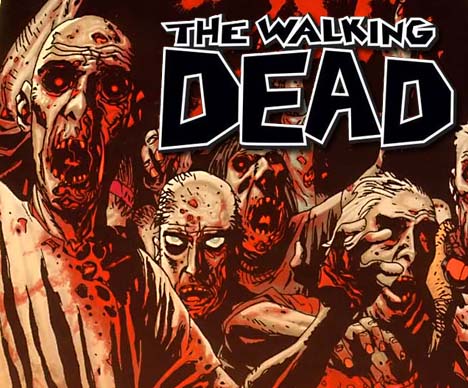
Undead Notes - The Walking Dead - Issues 1-78


Well before The Walking Dead became a ratings champion on AMC this year, the franchise had a notable following in the comics world. Starting in 2003, The Walking Dead first appeared as a monthly black-and-white comic published by Image , is still being published as such, and has been written the whole time by Robert Kirkman and drawn for the most part by Charlie Adlard (aside from issues 1 through 6, which Tony Moore who illustrated). As a comic, The Walking Dead is coming up on 80 issues and seven years, and, after having read Issues 1 through 78, it appears to only be getting stronger.
     A few things strike me immediately about The Walking Dead as a comic.  In the first place, for the zombie apocalypse genre, TWD is remarkably disciplined in its approach to pacing, which is to say that, while there is certainly plenty of action and many unpredictable plot turns and twists, Kirkman does not appear to throw things in unless they are a development of character, situation, or setting.  Some have called TWD a very “talky” comic, but the pages are rarely if ever filled with unnecessary dialogue or narrative, and you will often find many sections where the story unfolds in tight, economic images, panel to panel, with not a word on the paper.
     You don’t get seven years into a writing story about the zombie apocalypse (and maybe two years of story time) without getting past the initial thrills of a survival story.  This has to be more than a 90 minute Hollywood feature, so some deeper questions are explored.  How difficult do some survivors find it to let go of their loved ones – even those who have become undead?  When civilization has collapsed, how might some survivors revert to deception, criminality, immorality, and evil?  Is it worth having children?  Do you allow children to remain innocent of how the world has changed?  When there’s no more electricity and gasoline, how do you live?  When there’s nothing left to scavenge from the store shelves, how do you eat?  What happens to the planet when there’s five or six billion zombies endlessly searching for flesh to eat?
     Charlie Adlard, who makes the most of the black-and-white format, is at his best when working in the blacks to create tremendously bold shadows and a sense of feeling trapped, although his work in lighter tones create, at times, an almost bleached-out effect.  It’s as if in the world of TWD, there’s either too much light or not nearly enough.  I particularly admire the way in which Adlard shades the eyes of and allows for a fully rotted-out mouths of his zombies.  He’s also particularly attentive to the wounds, scratches, and scars of the characters; you really feel as if these people are deep in the fight month after month.  There are images in the comics (from both Adlard and Moore), though, that are so strong, they are bound to work their way into the storyboarding of the series, as did the now-iconic image of Rick Grimes on horseback arriving in a destroyed Atlanta.
     Viewers of the series The Walking Dead should be encouraged to learn – just as I did – that although Frank Darabont and his team did change many aspects of the story in the six-episode mini-season this past fall, they can still make full use of almost all of the material from the comic’s seven-year run.  The relationship triangle between Rick and Lori Grimes and Shane Walsh has yet to be resolved, and Carl Grimes is a much fuller character as the story develops in the comics.  The pizza delivery guy Glenn becomes much more than an excellent scavenger as time passes, and camper-driving Dale and blonde Andrea have steps to take as well.  Some of the most significant characters – Michonne, Tyreese, and The Governor – and settings – Hershel’s farm and the prison – have yet to be even hinted at.  In short, the television show has really just scratched the surface.  As with Lost (at its best) and Battlestar Galactica (almost always), there should be the potential at any moment to have one of those “Holy crap!” scenes that brings you out of your chair.
     In the meantime, if you can’t wait for the series to be back on the air in October, you’ve got seven years worth of comics you can read.  Just don’t say I didn’t give you a big spoiler alert.
     NOTE: My thanks to Andrew “Headshot” Miller for loaning me his collection of The Walking Dead.


PN Feedburner | PN iTunes | PN Twitter | PN Facebook | PN Video | PN Goodreads

12/25/10

The Master Switch by Tim Wu

     It's a truism to observe that every age narrowly believes itself to be unique and that the present isn't really as unusual as ages past -- but it's probably fair to say that, while many people give credence to the truism, some still prefer to secretly believe that there's still something special about the present.  "No, people, really -- this time, things are really different."  But who can really tell?
     Tim Wu, author of The Master Switch: The Rise and Fall of Information Empires, makes an ambitious attempt to determine if there's something unique about the information age and, particularly, the nature of the Internet.  Wu, a journalist and professor at Columbia University, takes on the question of what happens to information empires and why we should care about it at all.  The talk of late about net neutrality and, in recent years, of warrantless domestic wiretaps might get one's attention -- or maybe just the notion that adult entertainment might vanish entirely from the Internet.
1932 movie poster for 'Three on a Match'
     Wu presents two basic notions in his book, using the examples of motion pictures, the telephone, radio, and television to illustrate what he calls -- forgive the capital letters -- The Cycle.  First of all, Wu shows that information industries are created out of disruptive innovations and develop through a relatively open period when entry costs are low and creativity is high, then settle into closed monopolistic structures where entry costs are high and innovation is low.  Secondly, Wu argues that the closed periods of information industries (the years of Ma Bell or the Hollywood studio system or the Big Three TV networks) tend to economic development at for the sake of stable profits and cultural consensus -- a trade-off that runs counter to free market and libertarian ideals.  Wu's retelling of the cutthroat history of these industries -- and the government's cooperation (at times) with monopolists -- is surprising.  You probably know about Hollywood's conservative Hays Code, but the story of the quashing of FM radio is enough to make you depressed all over again. Say what you will about the Nixon Administration, but officials from those years set in motion both the explosion of cable television and the breakup of AT&T.
     In many ways, Wu's narrative about the open-then-closed cycle of information empires is to set up the fundamental questions that face us now: Is the Internet fundamentally different and why should we care?  To the first question, Wu clearly outlines that the Internet's structure -- a network of networks that is designed to go around most disruptions and across most platforms and technologies -- tends to resist a complete monopoly.  In other words, if Comcast throttles my Netflix, I'll switch to some other provider -- by satellite, for instance.  The second part of the question, about caring, is answered through an examination of Apple and its ubiquitous iPod, iPhone, and iPad.  Wu doesn't call these devices computers, but rather, "information appliances," which exist inside a walled garden of proprietary monopolies (Apple and AT&T), as opposed to hardware, software, and content with more open standards (Google and Verizon). Ultimately, Wu comes down on the side of openness -- if in the broader political sense of freedom of speech.  If information industries are largely closed and in the hands of a few, access to channels of communication will be limited and our own activities are much more likely to be monitored.
     Whatever opinions one might have on the future of the Internet -- "No, this time it's really really going to be different!" -- Wu's book is a worthwhile read for the stories it tells about the development of 20th century media, and the serious issues it raises for how we will live and work in the information economy -- as digital artisans and connoisseurs or mere consumers of the same old bits and bytes as everyone else on the planet.

PN Feedburner | PN iTunes | PN Twitter | PN Facebook | PN Video | PN Goodreads

Eater's Notes - The Kwanzaa Cake of Questionable Intent

Sandra Lee's demonstration of white-girl kuumba
I wish you all a happy belated Hanukkah, a merry Christmas, and, tomorrow, an auspicious start to Kwanzaa.  With all the goodies and gifts abounding, my gift to you is a cautionary tale -- a video actually.  From a few years back on the Food Network, we have a video of Sandra Lee throwing together some sort of a cake in honor of Kwanzaa.  Wait for the last few moments when Ms. Lee takes a bite of her creation.  Although this is by no means a fresh video, it's a holiday favorite around the house, where the cake itself is known as "an edible hate crime."  As one commentator has offered, ""If I was black, I'd ask for some reparations after watching this!"


PN Feedburner | PN iTunes | PN Twitter | PN Facebook | PN Video | PN Goodreads

12/24/10

Viewer's Notes - The Expendables

     Just to avoid being too sensitive and thoughtful here in the holiday season, allow me to admit a guilty pleasure from the aftermarket, a film I missed from the summer: The Expendables.  Panned by critics for its brain-dead qualities and clearly marketed to a particular gender and age -- even knowing this -- I could not resist.
     As a man in my 40s, I'll confess that the details of this movie are right in my wheelhouse. A group of highly skilled mercenaries navigate their ways through the professional and personal complications that inevitably arise when you are a highly skilled mercenary.  Their names? Barney Ross (Stallone), Lee Christmas (Statham), Yin Yang (Li), Toll Road (Randy Couture), Gunner Jensen (Dolph Lundgren), and so forth.  There are lot of guns and knife killings, lots of blood, and lots of crunchy punching and kicking.  There's a plot about a job nobody else will take to a jungled nation nobody has heard of, but that's beside the point.
     The Expendables is so clearly over the top that it's value is in that peculiar realm of action homage that is as much parody as tribute, along the lines of both volumes of Tarrantino's Kill Bill and Jet Li's best features, Fong Sai Yuk and its sequel.  What makes this film distinctive is what ends up being borrowed from 80s action movies -- the sheer volume of the guns (both in number and sound), the fire and explosions, and sheer the splattery crackling mess of the general melee.  I didn't even mind the laconic attempts of the characters to show their emotional sides, the grim detachment of the warrior-poet, best personified by Mickey Rourke in his role as the mechanic-painter Tool.
    But enough about warrior-poets, and more about the violence.  The Expendables is old school in its approach to mayhem, with hand-to-hand fights that look more like ass-kicking than dancing, blanks rounds in the firearms, and a taste for really blowing things up.  You'll be hard-pressed to find too much CGI in this movie, and the sudden shift to slo-mo is refreshingly absent.  The last half hour of the film is as entertaining an action climax as I've seen in years.
     All this is to say that the director, Sylvester Freaking Stallone, really knows exactly what he wants to do and he does it.  Awesome. Stallone should not have to apologize for making this movie, and you shouldn't have to apologize for enjoying it.

PN Feedburner | PN iTunes | PN Twitter | PN Facebook | PN Video | PN Goodreads

PN 139 - Judy Collins - 'Over the Rainbow'


Judy Collins discusses her participation in the creation of the book 'Over the Rainbow,' based on the famous song from 'The Wizard of Oz.'


Listen via Feedburner
Listen via iTunes

PN Feedburner | PN iTunes | PN Twitter | PN Facebook | PN Video | PN Goodreads